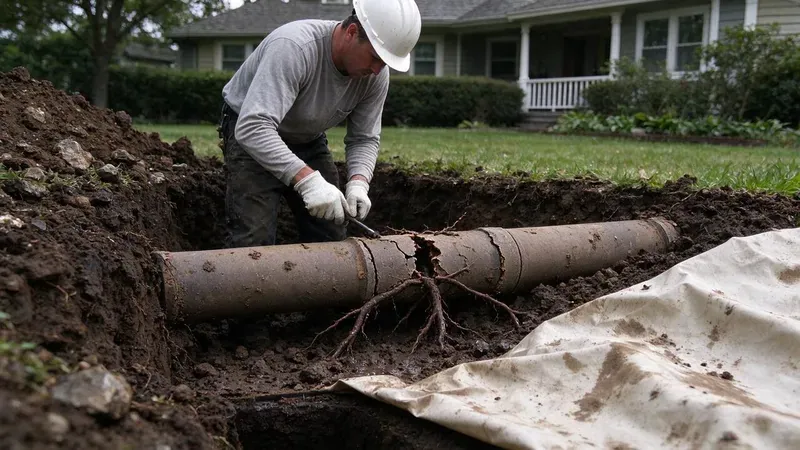
The Hidden Threats to Your New Hampshire Plumbing
Every home faces unique challenges, and that includes the plumbing buried beneath the yard and foundation. Underground pipes, whether they carry fresh water into your home or waste away, are critical to your property's function. When these pipes fail, it's more than just an inconvenience. It can lead to significant property damage, costly water bills, and even health hazards. At FVR Plumbing, we've seen it all, from minor leaks to complete line collapses, and we understand the conditions that put New Hampshire plumbing at risk.
Many homeowners don't think about their underground pipes until there's a problem. But understanding the common culprits behind pipe damage can help you recognize symptoms early and take action. Climate, soil type, and even the age of the local housing stock all play a role in the lifespan of these essential systems. Knowing what to look for and the modern solutions available can save you a lot of headache and expense down the road.
Common Causes of Underground Pipe Damage in New Hampshire
Tree Root Intrusion
One of the most frequent offenders for underground pipe damage, especially in established neighborhoods, is tree roots. Trees naturally search for water, and the small leaks or condensation around your buried pipes can act like a beacon. Once a tiny root finds its way into a hairline crack or a loose joint, it will grow, expanding the opening and ultimately crushing or completely blocking the pipe. This is particularly common with older clay or cast iron pipes, which are more susceptible to root penetration than modern PVC.
Shifting Soil and Foundation Issues
Rocky glacial soil and shallow ledge are common in New Hampshire, which can make digging for sewer and water lines slow and expensive.
Expansive clay soils, found in many parts of the country, swell when wet and shrink when dry, creating real movement beneath a home. This constant shifting can put immense stress on underground pipes, leading to cracks, dislodged connections, or even complete pipe breaks. Foundation movement, which is often related to soil expansion and contraction, can exacerbate these problems, especially for pipes running directly under or through the slab.
Corrosion and Aging Materials
Older homes frequently show decades of patchwork plumbing, so repiping can make more sense than repairing one section at a time.
Many older homes were built with galvanized steel or cast iron pipes for their underground water and sewer lines. While durable in their time, these materials are prone to corrosion over decades of exposure to water and soil. Galvanized pipes can build up mineral deposits inside, restricting flow, while cast iron can rust and become brittle, making it vulnerable to cracking and collapse. Even modern PVC pipes, while resistant to corrosion, can degrade over many decades due to ground pressure or chemical exposure.
Extreme Weather and Ground Conditions
Humid summers bring sweating on cold water lines and damp basements that can hide slow leaks.
Extreme heat can lead to soil drying out and contracting, adding to pipe stress. Severe freezes can cause pipes to freeze and burst, especially if they are not buried deep enough or are poorly insulated. Additionally, heavy rainfall and flooding can scour the ground, exposing pipes or washing away supporting soil, leaving them vulnerable to damage.
Modern Repair Solutions for Damaged Underground Pipes
Gone are the days when any underground pipe repair automatically meant extensive trenching through your yard. Modern plumbing technology offers less invasive, more efficient solutions that save time, money, and your landscaping. At FVR Plumbing, we use a range of advanced techniques tailored to the specific type and location of the damage.
- Trenchless Pipe Repair: This is a big step forward for many homeowners. Instead of digging a long trench, we can often repair or replace pipes with minimal excavation. Methods include pipe lining, where a new resin-impregnated liner is pulled or blown into the existing pipe and then cured to create a new, durable pipe within the old one. This technique is well suited for repairing cracks and small breaks.
- Pipe Bursting: For more severely damaged or collapsed pipes, pipe bursting is another trenchless option. This involves pulling a new pipe through the old one, simultaneously breaking apart the old pipe as the new one is installed. It requires small access points at each end of the pipe run but avoids the need for a continuous trench.
- Spot Repairs and Sectional Lining: Sometimes, only a small section of pipe is damaged. In these cases, we can perform a focused repair using a process similar to pipe lining, but only for a specific segment. This is often more cost-effective and quicker than replacing an whole line.
- High-Resolution Camera Inspections: Before any repair, accurately diagnosing the problem is crucial. We use state-of-the-art sewer cameras to visually inspect the inside of your pipes, pinpointing the exact location and nature of the damage without any digging. This allows for accurate, targeted repairs.
When to Call a Professional
Recognizing the signs of underground pipe damage early can prevent minor issues from becoming major disasters. If you notice any of these symptoms, it's time to call the experts at FVR Plumbing:
- Unexplained wet spots or lush patches of grass in your yard.
- A sudden, sharp increase in your water bill.
- Decreased water pressure in your home.
- Gurgling sounds from drains or toilets.
- Slow drains or repeated backups in multiple fixtures.
- The smell of sewage in your yard or around your foundation.
- Puddles of water near your foundation.
Ignoring these warning signs can lead to more serious damage, including foundation problems, mold growth, and costly water waste. Our experienced technicians at FVR Plumbing are equipped with the latest diagnostic tools and repair technologies to address your underground plumbing issues effectively and efficiently. Don't wait for a small leak to become a flood. Contact us today at (844) 442-1569 for a thorough inspection and reliable solution.
Need a licensed plumber in New Hampshire?
FVR Plumbing answers 24/7 and offers same-day service across New Hampshire.