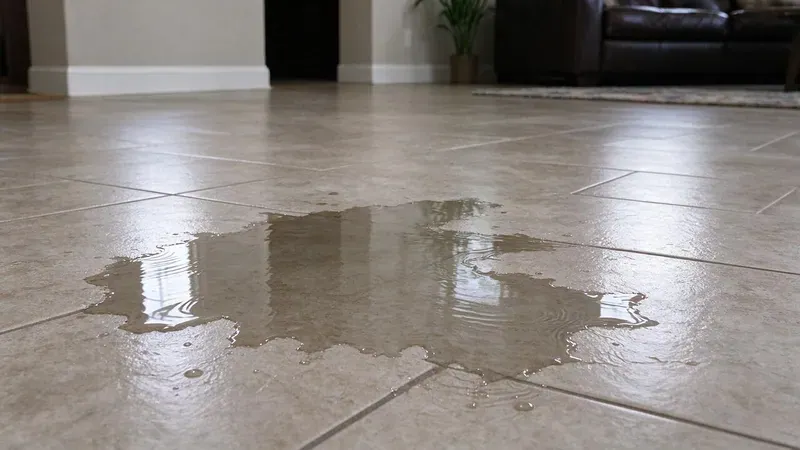
A large share of homes in New Hampshire, especially those built over the last fifty years, sit on a concrete slab. That design is practical and affordable, but it also means the copper or PEX water lines feeding your kitchen and bathrooms often run underneath or inside that slab. When one of those lines springs a leak, you cannot see it. The water spreads into the soil and gravel below the concrete, and the damage can build for weeks before anyone notices. Knowing the early warning signs is the best way to keep a small pinhole from turning into a flooring, foundation and mold problem.
Why Slab Leaks Happen in New Hampshire Homes
Several conditions stack up against under-slab plumbing. Many homes built from the 1970s through the early 2000s used soft copper tubing laid directly in the trench before the slab was poured. Over decades, that copper can wear thin where it rubs against rock, gravel or rebar. Soil adds to the stress.
Frost heave and shifting rocky soil can crack older sewer laterals and shallow water lines.
Expansive clay swells when it gets wet and shrinks during dry stretches, and hard soil layers or buried rock create pressure points that pipes press against as the ground moves. Each cycle puts a little more wear on the line.
Water chemistry matters too. Hard water and the disinfectants used by municipal systems can contribute to pitting corrosion on the inside of copper lines. Hot water lines tend to fail first because they expand and contract every time a faucet runs, which gradually wears the pipe wall where it touches the concrete.
Water in much of New Hampshire is soft and often slightly acidic, which can slowly corrode copper pipe and cause pinhole leaks.
The Warning Signs to Watch For
A slab leak rarely announces itself with a puddle. Instead, look for a pattern of small clues that point to water escaping somewhere you cannot see:
- Warm or hot spots on the floor. A leaking hot water line heats the slab above it. Bare feet on tile often find this first.
- The water meter moving when everything is off. Shut off every fixture, irrigation and the ice maker, then watch the leak indicator on your meter for 15 minutes.
- A water bill that jumps without explanation. Compare against the same month last year, since seasonal irrigation skews short-term comparisons.
- The sound of running water behind walls or under floors when nothing is running.
- A water heater that cycles constantly, because it keeps refilling with cold water to replace what is leaking out.
- Damp carpet, lifting laminate or cupped wood flooring with no clear source.
- Musty odors or mildew along baseboards, especially in interior rooms.
- New cracks in tile or drywall that appear alongside any of the signs above.
One sign alone is not proof. Two or three together, especially a moving meter plus a warm spot, is a good reason to schedule leak detection.
How Professionals Find the Leak Without Tearing Up the House
Modern leak detection is far less disruptive than most people expect. A plumber typically starts by isolating the hot and cold sides of the system and pressure testing each one to confirm which line is losing water. From there, acoustic listening equipment picks up the hiss of water escaping under pressure, and thermal imaging cameras can follow the heat signature of a leaking hot line across the slab. In many cases the leak can be pinpointed to within a foot or two before any concrete is cut.
Once the location is known, there are three typical paths forward. A spot repair means cutting a small opening in the slab, replacing the damaged section and patching the concrete. A reroute abandons the leaking line under the slab and runs a new PEX or copper line through the attic or walls instead. A full repipe makes sense when the home has had multiple slab leaks or the original copper is obviously near the end of its life. Spot repairs often run from about $1,500 to $4,000 depending on access and flooring, while reroutes commonly land between $1,000 and $3,500 for a single line.
What to Do in the Meantime
If you suspect a slab leak, find your main shutoff now so you are not hunting for it later. In many homes it is near the front hose bib, in a garage or basement, or in a box near the street. If the meter test confirms a leak and you notice water surfacing, turn off the main and, if the hot side is involved, set the water heater to vacation or pilot mode to protect the elements or burner. Take photos of any damaged flooring for your homeowners insurance, since many policies cover the cost of accessing and repairing the leak even if they do not cover the pipe itself.
When to Call a Professional
A slab leak is not a DIY repair. Cutting concrete without knowing exactly where the leak is wastes time and can damage post-tension cables found in many newer slabs. If your meter keeps moving or you have found a warm spot that won't go away, call FVR Plumbing at (844) 442-1569. Our technicians use pressure testing, acoustic equipment and thermal imaging to locate the leak, then explain spot repair, reroute and repipe options with clear pricing before any work begins.
Need a licensed plumber in New Hampshire?
FVR Plumbing answers 24/7 and offers same-day service across New Hampshire.